
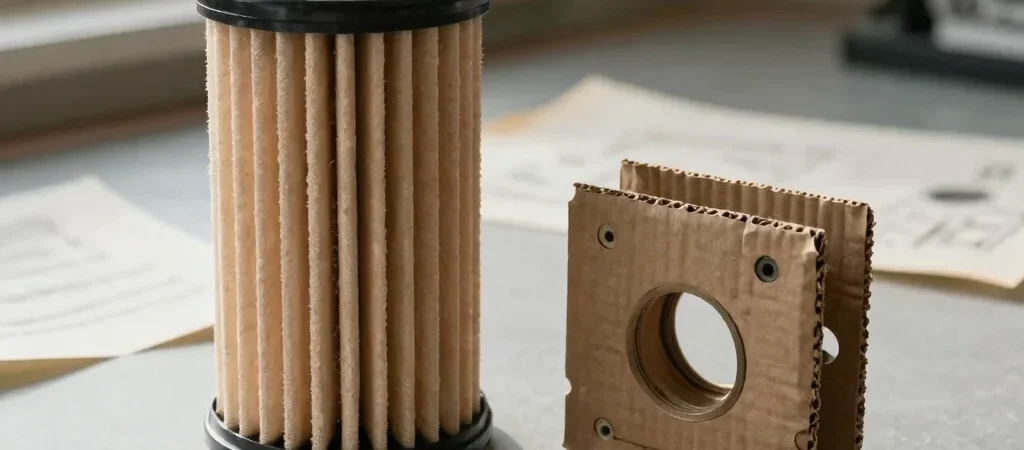
The problem aboard Apollo 13 was not only how to get home. After an oxygen tank ruptured on the way to the Moon in April 1970, the crew also had to manage rising carbon dioxide in the lunar module, Aquarius, where they had taken shelter. The available filters did not fit the equipment that needed them. The solution would have to bridge that mismatch.
Two spacecraft, one urgent problem
Apollo 13 had launched with the command module Odyssey and the lunar module Aquarius. After the explosion, the crew powered down Odyssey to conserve what remained for the return and moved into Aquarius. It was a lifeboat never designed to support three astronauts for the long journey back to Earth.
As carbon dioxide built up, the crew needed to use square command-module filter cartridges in the lunar module’s round openings. The hardware did not match, and there was no spare part waiting to solve the problem. On the ground, engineers worked out a way to adapt the pieces using materials available to the crew.
Making the pieces fit
The workaround depended on ordinary supplies aboard the spacecraft, including a plastic bag, cardboard, and tape. Mission Control talked the astronauts through assembling an adapter that could connect the square cartridge to the lunar module’s system. This was not a clean, purpose-built replacement. It was a practical answer to the equipment in front of them.
That distinction is what makes the episode so revealing. The ground team had to design for real constraints, then explain the process clearly enough for the crew to reproduce it in cramped conditions. The astronauts, in turn, had to handle the materials carefully and trust a device assembled far from a workshop.
A return made by many hands
Apollo 13 circled the Moon and returned to Earth on April 17, 1970. The improvised filter adapter was one part of a larger effort to bring the crew home, alongside difficult decisions about power, navigation, and the use of the lunar module. No single clever fix explains the mission’s survival.
But the adapter offers a compact account of the mission’s larger lesson: in a crisis, expertise has to meet the actual objects, limits, and people involved. The useful question is not what a perfect solution would look like. It is what can be made to work safely with what is already there.